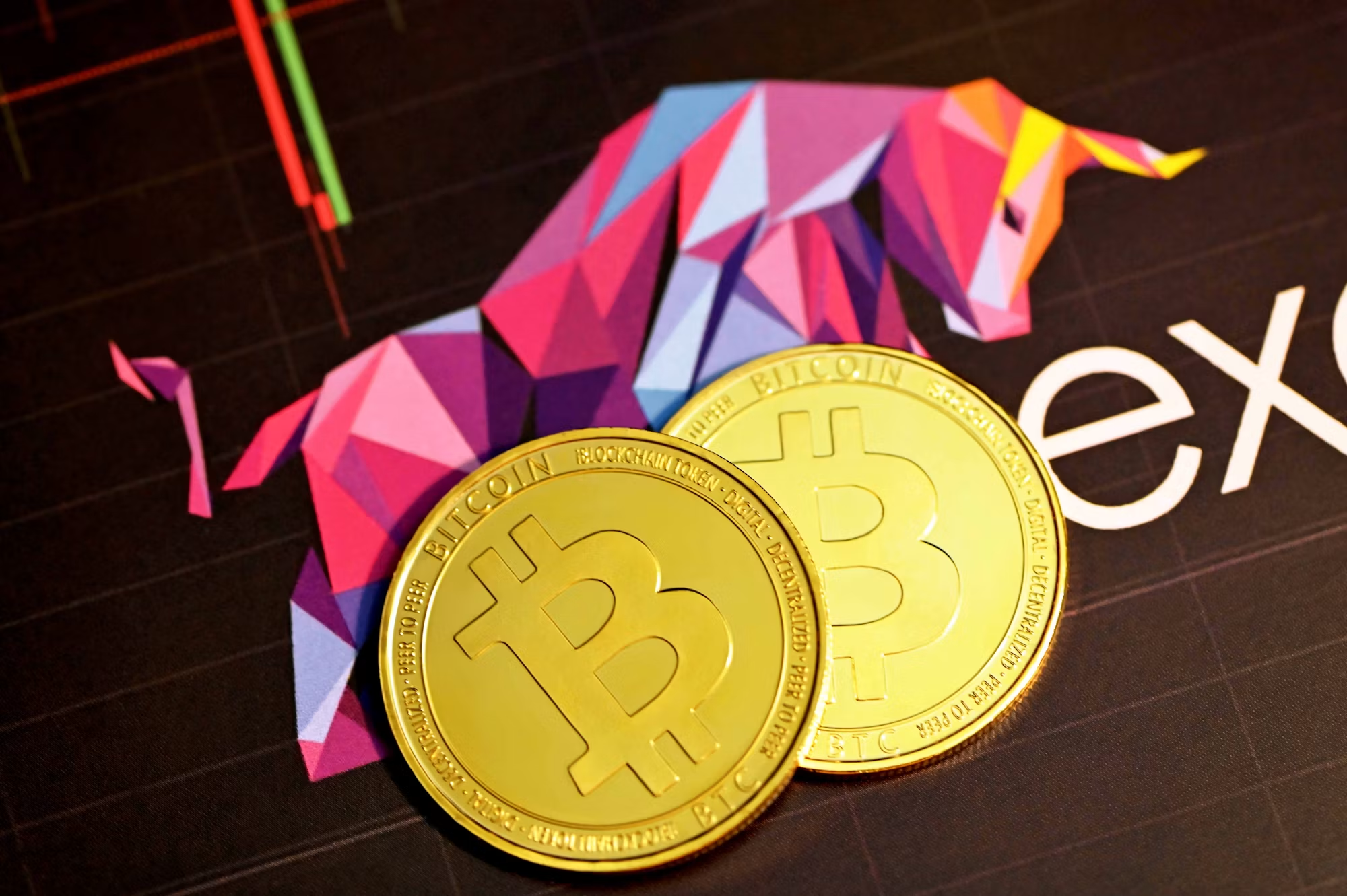
The Evolution of Cryptocurrencies: Transforming the Financial Landscape

Cryptocurrencies have rapidly evolved from niche assets to mainstream financial instruments, revolutionizing how we perceive money and conduct transactions. Their unique properties, powered by blockchain technology, have opened up new avenues for investment, commerce, and decentralized finance. This article delves into the evolution of cryptocurrencies, highlighting their various applications and the impact they are having on the global financial landscape.
Understanding Cryptocurrencies
At their core, cryptocurrencies are digital or virtual currencies that employ cryptographic techniques for security. Unlike traditional currencies, they operate on decentralized networks based on blockchain technology, which records transactions across a distributed ledger. This decentralization eliminates the need for intermediaries, such as banks, enabling peer-to-peer transactions that are both transparent and secure. Bitcoin, the first and most well-known cryptocurrency, was introduced in 2009, laying the groundwork for thousands of alternative cryptocurrencies that have followed.
The Investment Potential
One of the most significant developments in the cryptocurrency space has been the recognition of digital currencies as a viable investment asset. Over the past decade, cryptocurrencies have attracted a diverse range of investors, from individual retail traders to institutional funds. The volatility of the cryptocurrency market presents both opportunities and risks, with prices fluctuating dramatically over short periods.
Long-term investors often adopt a buy-and-hold strategy, purchasing cryptocurrencies with the belief that their value will appreciate over time. This approach requires not only patience but also a deep understanding of market dynamics and technological advancements. Institutional investment has further solidified the legitimacy of cryptocurrencies as an asset class, with major firms allocating significant capital to digital currencies, thus enhancing market stability and maturity.
On the other hand, active traders exploit the inherent volatility of cryptocurrencies to generate profits. The ability to trade 24/7 allows traders to capitalize on price movements in real time. Various trading strategies, including day trading, swing trading, and arbitrage, cater to different risk appetites and investment goals. The rise of user-friendly trading platforms has democratized access to cryptocurrency markets, enabling more individuals to participate in this exciting financial frontier.
Daily Transactions: A Growing Trend
As cryptocurrencies gain acceptance, more merchants are beginning to accept them as a form of payment. This trend marks a significant shift in how consumers conduct transactions, enabling them to use digital currencies for everyday purchases. Payment processors like BitPay and CoinGate facilitate the conversion of cryptocurrencies into local currencies, ensuring a seamless experience for both merchants and customers.
The advantages of using cryptocurrencies for payments are numerous. Transactions can often be completed faster than traditional banking methods, reducing waiting times for consumers. Additionally, the lower transaction fees associated with cryptocurrency payments appeal to both merchants and consumers. By bypassing traditional banking fees, businesses can retain more revenue while providing customers with a cost-effective payment option.
Moreover, the borderless nature of cryptocurrencies enables seamless international transactions, which is particularly beneficial for businesses engaged in global commerce. This capability eliminates the need for currency conversion and reduces the complexities associated with cross-border payments, making cryptocurrencies an attractive option for international trade.
The Remittance Revolution
Cryptocurrencies are also transforming the remittance industry by providing a more efficient and cost-effective way to send money across borders. Traditional remittance services often impose high fees and lengthy processing times, creating barriers for individuals looking to support family members or friends in other countries.
By leveraging cryptocurrencies, individuals can send funds quickly and at a fraction of the cost compared to traditional methods. Transactions can typically be completed within minutes, ensuring that recipients have timely access to the funds they need. This speed and efficiency are particularly beneficial for individuals in developing countries who rely on remittances to support their families.
The transparency provided by blockchain technology ensures that transactions are traceable, fostering trust between senders and recipients. This level of accountability is crucial for building confidence in the remittance ecosystem, paving the way for broader adoption of cryptocurrency solutions.
Decentralized Finance (DeFi): A New Financial Frontier
One of the most exciting developments in the cryptocurrency space is the rise of decentralized finance (DeFi). DeFi encompasses a wide range of financial services that operate without traditional intermediaries, allowing users to lend, borrow, trade, and earn interest on their digital assets. By utilizing smart contracts—self-executing contracts with the terms of the agreement directly written into code—DeFi platforms automate transactions, reducing costs and increasing efficiency.
This innovation democratizes access to financial services, enabling anyone with an internet connection to participate in the global economy. For instance, users can provide liquidity to decentralized exchanges (DEXs) and earn rewards in the form of transaction fees. Additionally, individuals can lend their assets to others and earn interest, creating new opportunities for passive income. As the DeFi landscape continues to evolve, it attracts a diverse user base, from individual investors to institutional players who increasingly recognize the potential of decentralized finance.
Tokenization of Real-World Assets
Another promising application of cryptocurrencies is the tokenization of real-world assets. This process involves converting physical assets, such as real estate, art, and commodities, into digital tokens on a blockchain. Tokenization facilitates fractional ownership, enabling individuals to invest in high-value assets without requiring substantial capital.
For example, a luxury property can be tokenized, allowing multiple investors to hold shares in it. This enhances liquidity in traditionally illiquid markets, making it easier for investors to buy and sell ownership stakes. As tokenization becomes more prevalent, it challenges conventional notions of ownership and investment, opening new doors for individuals seeking to diversify their portfolios.
Charitable Contributions in the Digital Age
Cryptocurrencies are also making a significant impact in the charitable sector. Many organizations are now accepting donations in digital currencies, providing a borderless and efficient way to support charitable causes. The transparency inherent in blockchain technology ensures that donations can be tracked, allowing donors to see precisely how their contributions are utilized.
This level of accountability fosters trust between donors and organizations, potentially increasing overall contributions. Moreover, the reduced transaction fees associated with cryptocurrency donations enable organizations to maximize the impact of each contribution, directing more resources toward their missions. As awareness of the benefits of using cryptocurrencies for charitable giving grows, this practice is likely to gain traction, encouraging a culture of transparency and efficiency in philanthropy.
Navigating Challenges Ahead
While the future of cryptocurrencies appears promising, several challenges must be addressed. Regulatory uncertainties remain a significant concern, as governments worldwide grapple with how to classify and regulate digital assets. Clear regulatory frameworks are essential for fostering trust and encouraging broader adoption of cryptocurrencies in mainstream finance.
Security concerns also persist in the cryptocurrency space. High-profile hacks and scams have highlighted the need for robust security measures to protect users’ assets and personal information. Educating individuals about safe practices and the importance of using reputable platforms is crucial for mitigating risks.
Despite these challenges, the potential for cryptocurrencies to reshape the financial landscape is undeniable. As technology continues to evolve and public awareness grows, the integration of cryptocurrencies into daily life is likely to increase, paving the way for a more inclusive and efficient financial future. In conclusion, cryptocurrencies represent a significant shift in how we engage with money and finance. By embracing this digital revolution, we can unlock new opportunities for investment, commerce, and social impact, ultimately fostering a more equitable global economy.